
 Turnkey Inside
Call Option vs Put Option – You have probably heard traders casually mention call options and put options as if everyone automatically understands them.
In reality, many people enter trading without a clear mental picture of how these instruments actually work, and that confusion usually shows up later as losses. Options are not mysterious, but they do demand clarity, especially when comparing call option vs put option in real market situations.
Read More: Spot Algorithmic Trading: What It Is and How It Works
This section breaks it down in a practical, trader focused way, while still being accurate enough for anyone planning to build or expand a brokerage offering derivatives.
What Is a Call Option and How It Really Works
Call Option vs Put Option – A call option gives you the right, but not the obligation, to buy an underlying asset at a fixed price, known as the strike price, before or at a specific expiration date. You pay a premium upfront for this right. That premium is gone whether you exercise the option or not, and that part is sometimes underestimated.
In simple terms, you buy a call option when you expect the market price of an asset to go up. If the price rises above the strike price plus the premium paid, the option starts to make sense financially. If it does not, the option can expire worthless, and yes, that happens more often than marketing pages like to admit.
For example, assume EUR/USD is trading at 1.1000. You buy a call option with a strike price of 1.1050, expiring in one month, and you pay a premium of 30 pips. The market must move beyond 1.1080 for you to be in profit. Anything less, and you either lose partially or fully.
From a broker perspective, call options are attractive because they are straightforward to explain to bullish traders. But the risk profile needs to be explained clearly. Many retail traders think calls mean unlimited profit and limited risk, which is technically true, but only if volatility and pricing are well understood.
What Is a Put Option and Why Traders Use It
Call Option vs Put Option – A put option works in the opposite direction. It gives you the right, but again not the obligation, to sell an underlying asset at a predefined strike price before or at expiration. You buy a put option when you believe the market price is going to fall.
The logic mirrors the call option, but psychologically, traders struggle more with puts. Shorting feels uncomfortable for many people, even though buying a put option is not the same as short selling the asset directly. Your risk is still limited to the premium you pay.
Let us take the same EUR/USD example. The pair trades at 1.1000. You buy a put option with a strike price of 1.0950, paying a premium of 25 pips. If the market drops to 1.0900 before expiration, the option becomes profitable. If the price stays above 1.0950, the option may expire worthless.
Put options are commonly used as hedging tools. Professional traders, funds, and even brokers themselves use puts to protect exposure. Retail traders often ignore this and use puts only for speculation, which is a missed opportunity, honestly.
Call Option vs Put Option Difference in Market Behavior
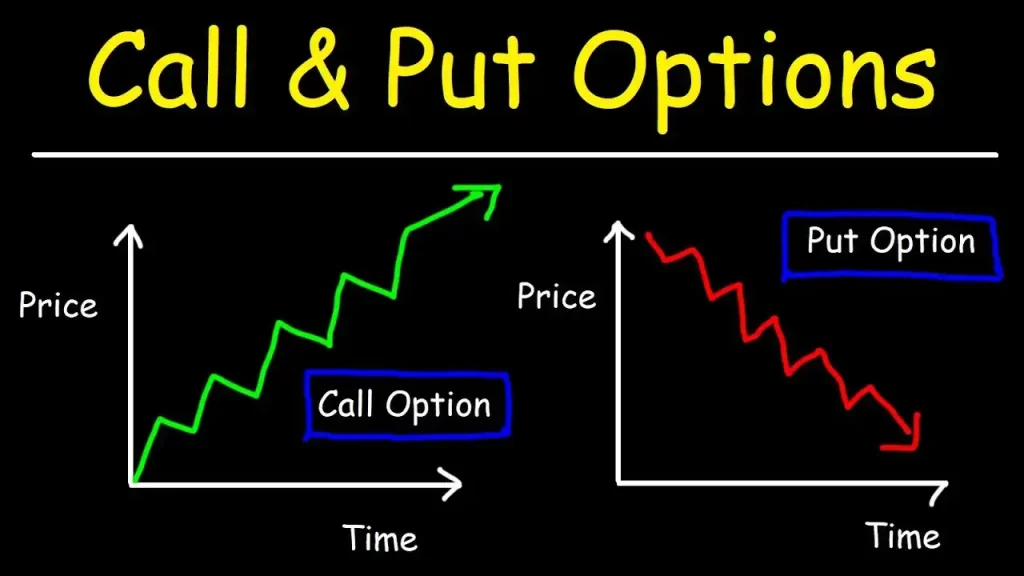
The real call option vs put option difference becomes clearer when you see how they behave under different market conditions.
In trending markets, call options perform well in strong bullish moves, while put options shine during aggressive sell offs. In sideways markets, both can lose value quickly due to time decay, something known as theta decay.
This is where many traders get frustrated. You might predict the direction correctly, but still lose money because the move was too slow. Time decay is not something beginners like to hear about, but it matters a lot.
Volatility also plays a major role. High implied volatility increases option premiums for both calls and puts. This means you pay more to enter a position. When volatility drops, option prices can fall even if the underlying price moves in your favor. That feels unfair at first, but it is just how options pricing models work.
For brokers, explaining this difference clearly can reduce disputes. Many client tickets come from misunderstanding why an option lost value even when the market moved in the expected direction.
Risk and Reward Comparison
Call Option vs Put Option – From a risk perspective, both call and put options offer limited downside for the buyer. You cannot lose more than the premium paid. That is a major selling point and one reason options are popular in regulated markets.
The reward side is where expectations often become unrealistic. Call options can theoretically offer unlimited upside if the market rallies strongly. Put options have a limited maximum gain because prices cannot fall below zero, or near zero in forex terms.
However, in real trading conditions, both are influenced by liquidity, spreads, execution quality, and margin requirements when options are written rather than bought. These operational details are often ignored in beginner guides but matter deeply at brokerage level.
If you are planning to offer options trading through your platform, you need robust risk management, pricing feeds, and clear contract specifications. Without that, complaints increase fast, especially during volatile events like central bank announcements.
Read More: What Is a Binary Broker and How They Operate
Which One Should You Use?
Call Option vs Put Option – Honestly, it depends on your outlook and your risk tolerance. If you’re expecting a market move but don’t want to risk your entire account, buying a call or put option can make sense.
If you’re a broker looking to build a Turnkey solution for your clients, offering options trading as part of your MetaTrader setup can differentiate you from others. Most platforms already support plugins or add-ons for options, and CRM tools can help manage these instruments effectively.
Plus, with increased demand for crypto options and multi-asset platforms, it makes sense to build a flexible brokerage from the start.
Want to know how to do that? Start your own forex broker with TurnkeyInside. We’ve helped dozens of brokers launch everything from forex and CFD platforms to advanced options setups.
Ready to build your platform? Talk to us at TurnkeyInside and let’s get you started.
