

 Turnkey Inside
What Is A Liquidity Provider – So you’ve been looking into forex or crypto brokerage models and keep coming across the term liquidity provider. Liquidity providers form the backbone of the forex ecosystem, ensuring that trades can be executed promptly and at competitive prices.
Read More: What is ECN vs STP Brokers: Understanding the Differences
Let’s unpack it properly, because if you’re planning to start your own broker, understanding liquidity providers is not just useful it’s very important.
What is a Liquidity Provider?

A liquidity provider is a market broker or financial institution that acts as a market maker in a specific asset class. In practical terms, these entities operate at both ends of currency transactions, simultaneously buying and selling particular assets at certain prices.
By doing this, they are effectively “making the market” creating an environment where trading can occur smoothly without significant price fluctuations between trades.
You might be wondering why these institutions would take on such responsibilities. The answer lies in their business model. Liquidity providers profit from the spread (the difference between buying and selling prices) and by strategically positioning themselves based on valuable market information available to them.
This approach requires them to accept a significant amount of risk, but the reward potential makes it worthwhile for these sophisticated market participants. When you place a trading order, liquidity providers match it internally if the size falls within their risk tolerance. For larger orders that exceed their capacity, they may offset the risk through hedging in the interbank market or by passing the order to other liquidity providers.
This intricate network ensures that orders of various sizes can be accommodated without causing major market disruptions.
Types of Liquidity Providers
Generally, you’ll see two types:
Prime Brokers / Prime of Prime (PoP)
These are intermediaries between your retail brokerage and the big banks or market makers. If you’re just starting out, going straight to tier-1 banks is usually not realistic, you won’t meet the volume or capital requirements.
That’s where a Prime of Prime steps in. They aggregate liquidity from multiple sources and give you access with lower entry thresholds.
Crypto Liquidity Providers
In the digital asset space, it’s different. There’s no central exchange like in forex. So your liquidity provider may be plugging into Binance, Kraken, Coinbase Pro, or even smaller OTC desks to pull in pricing and fill your client orders.
Major Liquidity Providers in the Global Forex Market
What Is A Liquidity Provider – In the global forex landscape, tier 1 liquidity providers accept only large volume orders, which smaller brokers cannot access directly.
The main players in the forex world include Deutsche Bank, UBS, and Barclays Capital, which are considered the most prominent liquidity providers globally. Other notable liquidity providers include:
1. Finalto
Finalto, which offers tailored multi-asset liquidity solutions and white-label offerings with access to over 800 instruments.
Their comprehensive trading solutions have made them a reliable choice for brokers looking to launch successful trading platforms.
2. B2Broker
B2Broker has established itself as a dominant force by providing liquidity services across multiple asset classes including forex, crypto derivatives, precious metals, energy assets, and indices.
They also offer payment solutions and white-label software that allow brokerage startups to develop their unique brand without extensive development background or in-house expenses.
3. IXO Prime
IXO Prime distinguishes itself with unparalleled access to global forex markets and cutting-edge technology solutions, featuring over 900 trading mechanisms and strict cybersecurity protocols.
Their focus on quality and security has earned them a reputation as an elite liquidity provider.
Why Does a Forex or Crypto Broker Need a Liquidity Provider?
What Is A Liquidity Provider – If you’re starting a brokerage, you need a reliable source for deep and fast liquidity. Imagine you’ve got ten traders placing simultaneous trades on major forex pairs. If you don’t have a liquidity provider feeding you real-time prices and executing those trades behind the scenes, you’re exposed. Either you delay executions (which traders hate), or you take on risk yourself.
Liquidity providers solve this by aggregating orders across global markets. Some even provide tier-1 liquidity, which means they aggregate from big players like Deutsche Bank, JPMorgan, or UBS. Others offer crypto liquidity, pulling data and execution capabilities from various crypto exchanges or OTC desks.
They also allow you to offer tighter spreads. This matters a lot, especially if you want to compete in a saturated market. A decent provider can quote spreads as low as 0.1 pip on EUR/USD, without you taking on additional risk.
How to Select the Right Liquidity Provider
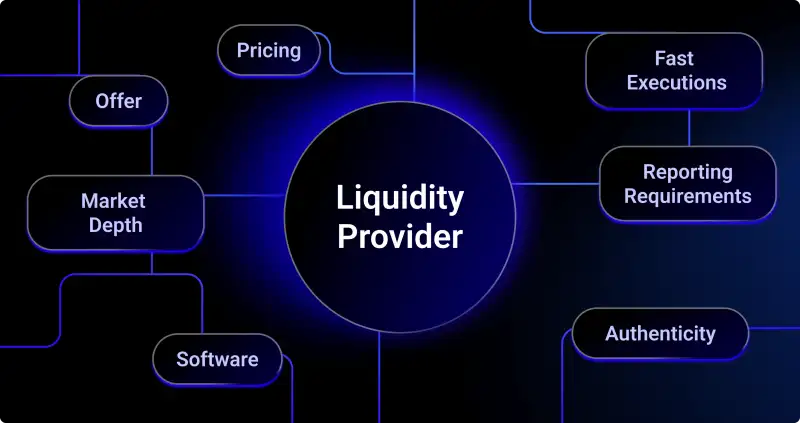
What Is A Liquidity Provider – Selecting an appropriate liquidity provider is crucial for your brokerage’s success. The provider you choose directly impacts spreads, trade execution speed, system reliability, and ultimately, customer satisfaction.
You should prioritize providers that adhere to regulatory requirements, possess robust technological infrastructure, and offer transparent pricing structures to safeguard your business and build trust with your clients.
When evaluating potential liquidity providers, consider these factors carefully:
1. Product offerings
Different liquidity providers supply varying ranges of trading instruments. Some excel in providing numerous currency pairs, while others might specialize in cryptocurrencies or stocks. Your selection should align with your business needs and desired market access.
2. Execution speed
In the fast-paced forex market, even milliseconds can make a difference in trade outcomes. The technology employed by the liquidity provider must support rapid order processing to prevent slippage and ensure client satisfaction.
3. Legal compliance
Working with properly regulated liquidity providers protects your business from potential legal issues and enhances your credibility with clients. Regulatory oversight helps ensure that the liquidity provider operates with integrity and follows established market practices.
Starting Your Own Forex Brokerage with Quality Liquidity
Read More: What Is An International Business Company: A Comprehensive Guide
Understanding liquidity providers is just the beginning of your journey in the forex industry. If you’re considering establishing your own forex brokerage, partnering with the right liquidity provider becomes even more critical. Your choice will determine not only your operational efficiency but also your competitive edge in this crowded marketplace.
With Turnkey, you can start your own forex broker business with confidence, knowing you’ll have access to premium liquidity solutions tailored to your specific needs.
The comprehensive suite of services offered by Turnkey enables you to focus on growing your brokerage while the technical aspects of liquidity provision are handled by experts in the field.
