
 Turnkey Inside
Understanding a liquidity aggregator is one of those topics that sounds technical at first, but once you break it down, it becomes very practical. You see it mentioned in broker presentations, platform documentation, and even marketing materials, yet many people working around forex still feel unsure about what it really does.
A liquidity aggregator is not just a piece of software sitting quietly in the background. It directly affects spreads, execution speed, slippage, and even how confident traders feel when placing orders. If something goes wrong here, complaints usually follow.
Read More: What Is A Liquidity Provider? Everything You Need to Know
This guide explains how a liquidity aggregator works, why brokers use it, and what benefits it brings, both for brokers and traders.
What Is a Liquidity Aggregator
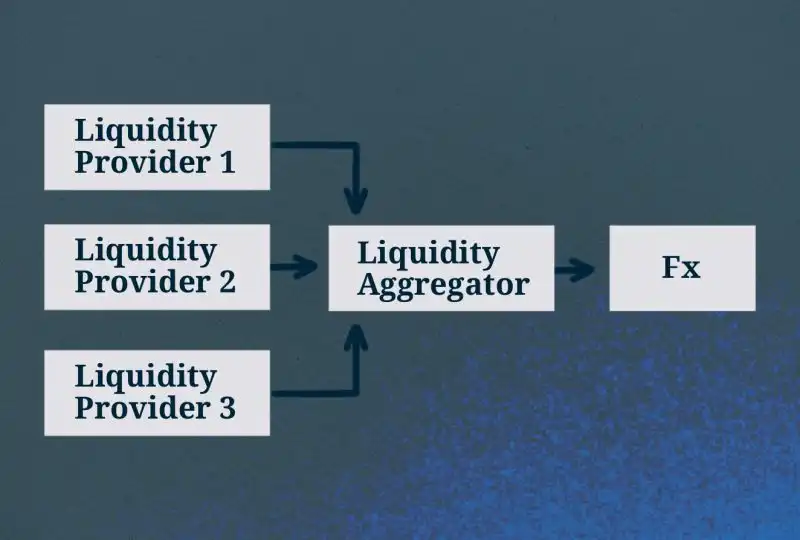
A liquidity aggregator is a system that collects price quotes from multiple liquidity providers and combines them into a single order book. Instead of relying on one bank or one provider, you pull prices from several sources at the same time.
The goal is simple. You want the best possible bid and ask prices available at any given moment. By aggregating liquidity, tighter spreads are usually created, and order execution becomes more stable.
Many brokers explain this in one sentence, but the actual process is more complex. Quotes are streamed continuously, filtered, ranked, and matched in milliseconds. When traders click buy or sell, the aggregator decides where the order should be sent.
Why Brokers Use a Liquidity Aggregator
Without a liquidity aggregator, a broker would depend on a single liquidity provider. That creates several risks. Spreads may widen during volatility, execution may slow down, and rejected orders become more frequent.
By using a liquidity aggregator, these risks are reduced. If one provider pulls liquidity or sends worse prices, others can still fill the order. This redundancy matters more than people think, especially during news events.
From a business perspective, brokers also gain flexibility. They can add or remove liquidity providers without changing the trading platform itself. This setup is often preferred when scaling operations.
How a Liquidity Aggregator Works Step by Step
1. Price Collection From Liquidity Providers
The first step is price collection. The liquidity aggregator connects to multiple liquidity providers, such as banks, prime brokers, or non-bank institutions.
Each provider streams bid and ask prices for various instruments. These prices arrive continuously and at very high frequency. The aggregator receives them, even when markets move fast.
Not all prices are equal. Some providers offer deeper liquidity, others faster response times. These factors are considered later in the process.
2. Price Filtering and Ranking
Once prices are received, they are filtered. Invalid quotes, outdated prices, or abnormal spreads are usually removed automatically.
After filtering, prices are ranked. The best bid and best ask are identified across all providers. This ranking process is critical, because it determines what traders actually see on their screens.
Latency matters here. If prices arrive late, they may be ignored. That is why server location and network quality are often discussed during setup.
3. Order Routing and Execution
When a trader places an order, the liquidity aggregator decides where to send it. The decision is based on price, available volume, and execution rules set by the broker.
Large orders may be split across multiple liquidity providers. This process is known as order slicing. It helps fill the order without causing excessive slippage.
Execution confirmations are then sent back through the platform. From the trader’s perspective, this happens instantly, but many steps occur behind the scenes.
Benefits of Using a Liquidity Aggregator
Implementing a robust liquidity aggregator does more than just fix technical issues. It directly impacts your bottom line.
1. Tighter Spreads
One clear benefit of a liquidity aggregator is tighter spreads. By comparing prices from multiple sources, the best available rates are offered to traders.
This is especially noticeable during normal market conditions. During volatility, spreads may still widen, but aggregation usually softens the impact.
Tighter spreads improve trading costs, which traders always appreciate, even if they do not say it directly.
2. Better Execution Quality
Execution quality improves because orders have more paths to be filled. If one provider rejects an order, another may accept it.
Slippage is reduced, though not eliminated. Some slippage is unavoidable in fast markets, and anyone promising zero slippage is probably exaggerating.
Consistency is what matters. Traders notice when execution feels predictable over time.
3. Scalability for Brokers
As trading volume grows, a liquidity aggregator allows brokers to scale without rebuilding infrastructure. New liquidity providers can be added to support higher volume.
This flexibility is useful during growth phases. Brokers often underestimate how fast volume can increase after a successful campaign. Scaling without major downtime is a big operational advantage.
Choosing the Right Aggregator
There are many technology providers out there. Some are standalone software companies; others are Prime of Primes who bundle the tech with the liquidity.
When evaluating a provider, look at their reporting tools. You need to see exactly how much volume you are sending to each LP. You need to see the rejection rates. You need transparency.
Also, check the integration. Does it plug easily into MetaTrader 4, MetaTrader 5, or cTrader? Most do, but the stability of that “bridge” plugin varies. A poorly coded bridge can crash your MT4 server.
Read More: Forex IB Commission Explained: Rates, Models & Examples
Conclusion
The days of a single price feed are over. In the current market, a liquidity aggregator is standard infrastructure. It is the engine room of your brokerage. It dictates the quality of the product you sell.
If your execution is fast and your prices are tight, traders will stay. If they get slipped 10 points on every news release, they will leave. It is that simple.
Investing in a proper aggregation solution gives you control. You control the spreads. You control the execution logic. You control the risk. It moves you from being a passive reseller of prices to an active manager of your trading environment.
Start Your Own Brokerage with Professional Tech
Understanding liquidity aggregation is just one piece of the puzzle. To build a successful brokerage, you need a complete ecosystem that integrates this technology seamlessly.
Turnkeyinside offers end-to-end solutions for aspiring brokers. From setting up your legal entity to deploying high-performance trading platforms connected to top-tier liquidity aggregators, we handle it all.
